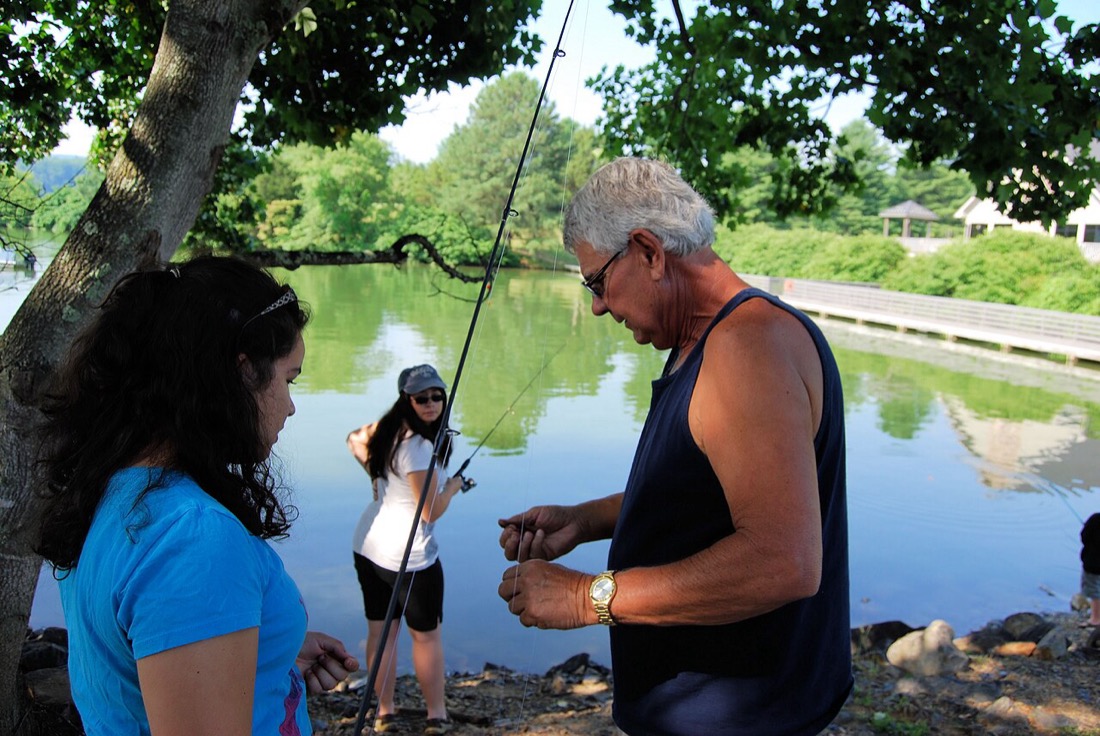
Grand Lake o’ the Cherokees is one of Oklahoma’s big fishing lakes, spread across Craig, Delaware, Mayes and Ottawa counties. GRDA and TravelOK put it at about 46,500 surface acres. Our stays are in Langley, at the south end by the Pensacola Dam.
This guide covers what you can catch, when, the rules that catch visitors out, and where to put the boat in.
What you can catch
The Oklahoma Department of Wildlife Conservation lists these as the fish of interest on Grand Lake:
- Largemouth bass
- Black and white crappie
- White bass, and hybrid striped bass, which ODWC stocks regularly
- Channel, blue and flathead catfish
- Paddlefish, also called spoonbill
When to come
Spring and early summer are prime time on Grand Lake. For white bass, ODWC says March through late April are usually the peak months, when they make their spawning runs.
The lake has a long tournament history too. Bassmaster has held pro-level events here, including the Bassmaster Classic in 2013 and 2016, so you are fishing water the pros know.
Rules that catch visitors out
Most anglers need an Oklahoma fishing license. Paddlefish need more: ODWC requires a free paddlefish permit on top of your license. Crappie have a combined limit of 15 a day with a 10-inch minimum.
Snagging is not allowed below the dam’s turbine outlets down to the State Park Bridge, or below the spillway outlets for about half a mile, at any time of year. Regulations change, so check the current ODWC rules before you go.
Where to launch near Langley
Just below the dam, the Cherokee Area at Grand Lake State Park has a lighted boat ramp, and our hosts point guests to the GRDA courtesy dock by the dam. Every Club Lakeland stay has room for the truck and boat trailer, so you can be on the water early and back for dinner in town.